

Choosing between canned food and kibble is rarely about finding one “perfect” option. Vets usually compare wet vs dry cat food by looking at hydration, weight trend, dental comfort, medical history, and what your cat will reliably eat. For many households, mixed feeding (a measured combination of both) is a practical middle ground that supports routine and consistency.
How vets decide what to feed
Vets generally start with two questions: is the diet complete and balanced for your cat’s life stage, and does it support your cat’s current health goals? For many cats, both wet meals and dry diets can meet nutritional needs when the product is formulated as a full diet, not a “topper” or treat.
Look for clear life-stage suitability and a “complete and balanced” statement on the label. If your cat has ongoing health issues, your vet may suggest a specific therapeutic-style diet or feeding strategy tailored to the condition.
Next comes practicality: meal schedule, budget, your cat’s preferences, and whether you can measure portions accurately. Consistency matters more than perfection—feeding the “ideal” option on paper does not help if your cat refuses it or the routine falls apart.
Wet food: main benefits and drawbacks
Wet food’s biggest advantage is moisture. Many cats naturally drink less than ideal, and higher-moisture meals can support hydration day to day—one reason wet options often feature in vet-led feeding conversations for cats that need extra water intake.
Wet food can also help with portion control for some cats because it is often less calorie-dense per gram than kibble. That said, calories still add up quickly if you feed large tins or multiple pouches without checking the feeding guide and your cat’s body condition.
- Pros: higher moisture, often very palatable, can suit cats with dental pain or picky appetites.
- Cons: higher ongoing cost for some households, needs refrigeration once opened, can spoil if left out, packaging waste.
If you are comparing food formats, remember that not all wet foods are equal. Prioritise a clearly stated “complete and balanced” claim, an appropriate life-stage formula, and a protein-forward profile that your cat tolerates well.
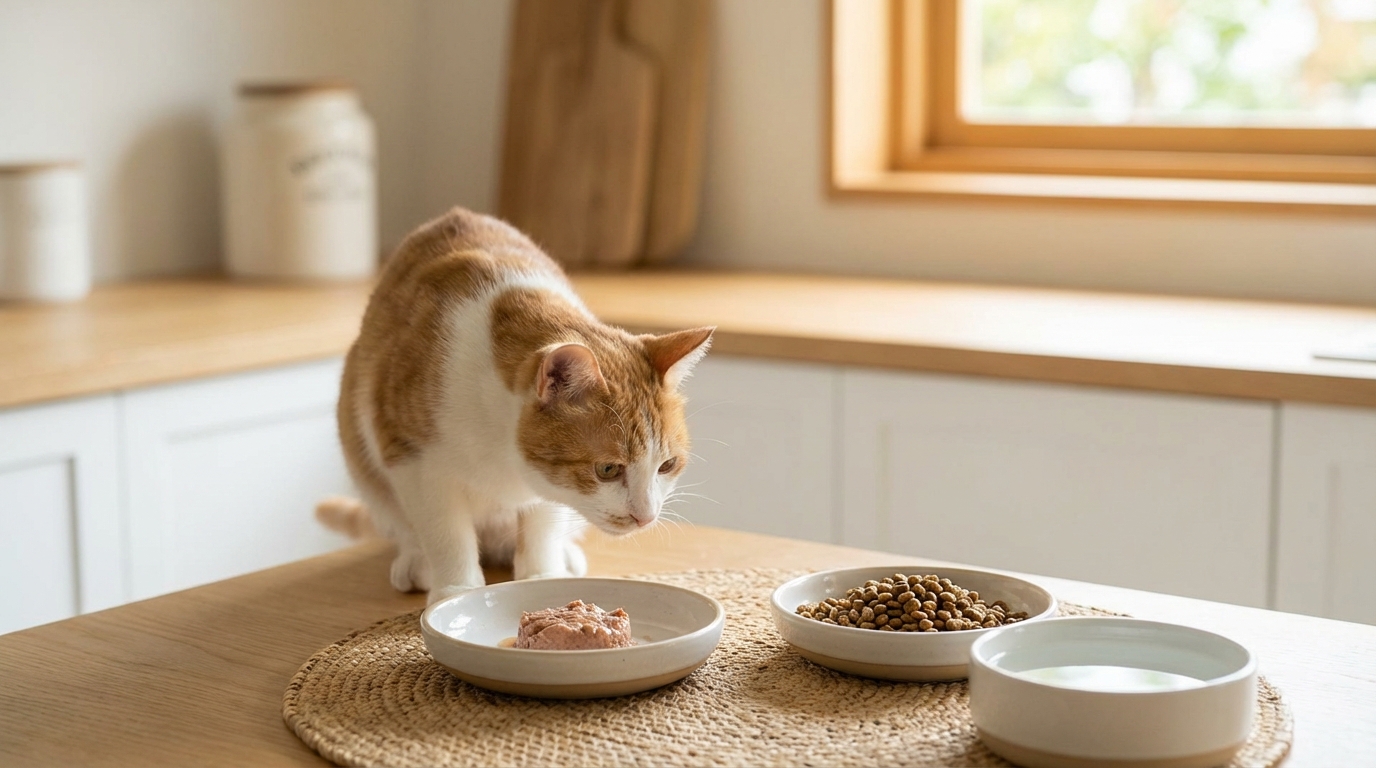
Dry food: main benefits and drawbacks
Dry food is popular because it is convenient. It stores easily, is simple to measure, and works well with automatic feeders for cats that do better with multiple small meals.
However, dry food contains far less moisture, so cats eating mostly kibble may need extra encouragement to drink. For some cats, leaving food down all day can also make weight creep up over time, especially in less active lifestyles.
- Pros: easy storage, simple portioning, budget-friendly for many, useful for timed feeders.
- Cons: low moisture, can be overfed if left down all day, may not suit cats with sore mouths.
Quick tip: If your cat eats mostly dry food, support hydration by offering multiple water stations, refreshing bowls daily, and using wide, shallow dishes that do not press on whiskers.
One common myth is that kibble “cleans teeth”. Some dry diets are designed to help reduce plaque mechanically, but most standard kibble is not a substitute for dental care. If dental health is a concern, focus on vet-approved dental strategies rather than relying on crunch alone.
How much wet vs dry to feed (a practical framework)
There is not one universal wet-to-dry ratio that fits every cat. A practical way to plan a combination is to focus on total daily calories first, then decide how to split those calories between wet and dry based on hydration needs, appetite, and routine.
- Compare calories, not volume: a “small amount” of dry can contain more calories than it looks. Use the calorie information on the packaging rather than scoops or handfuls.
- Choose a split you can measure consistently: for example, wet meals at set times and a weighed dry portion in a feeder.
- Use body condition score (BCS) as feedback: check your cat’s waistline and rib coverage regularly. If your cat is gaining or losing, adjust total calories gradually and re-check.
- Keep extras in perspective: treats and toppers that are not complete diets should not displace the main food.
If you are unsure where to begin, many cats do well with wet supporting moisture and palatability, plus a measured dry portion for convenience—then you adjust based on weight trend, stool quality, and your vet’s guidance.
Which cats do better on which format?
The best format depends on your cat’s needs, not a universal rule. Common vet-leaning considerations include:
- Cats prone to dehydration: often benefit from more wet meals or a combination that lifts overall water intake.
- Weight gain or food obsession: measured portions matter most; wet meals help some cats feel fuller, while timed dry portions can prevent grazing.
- Picky eaters: wet food aroma can improve acceptance; if you rotate flavours, change slowly to reduce tummy upsets.
- Dental sensitivity: softer textures can be more comfortable; consider pâté or mousse styles and keep up with dental checks.
- Multi-cat households: dry food can be simpler to manage, but separate feeding areas may be needed to keep portions fair.
In practice, the “winner” is usually the plan that keeps your cat at a healthy body condition score and fits into everyday life.
How to choose (and switch) without stomach upsets
Start by choosing a complete diet for your cat’s life stage (kitten, adult, senior). Then narrow it down by priorities such as hydration support, weight control, sensitive stomachs, or hairball management.
Portion control is the make-or-break factor. Weigh your cat regularly (more often if weight is changing), and use a kitchen scale or consistent measuring method so servings do not gradually drift upwards.
When changing foods, transition gradually over about a week: start with mostly the old food and slowly increase the new. If stools become persistently loose, vomiting occurs, or your cat stops eating, pause the change and discuss the next step with your vet.
Finally, keep bowls clean, place them away from litter trays, and do not leave wet food out for long periods. Small routine improvements can make either format work better.
Frequently Asked Questions
Is wet food always better than dry food?
No. Wet food can support hydration and may help some cats with appetite or weight control, but a high-quality dry diet can also be complete and balanced. The best choice depends on your cat’s health, routine, and how reliably you can measure portions.
Can I feed a mix of wet and dry?
Yes, many cats do well on a combination. The key is keeping total daily calories appropriate and ensuring both foods are complete diets (unless one is clearly labelled as a topper).
How do I know if my cat is getting enough water?
Watch for normal energy, regular urination, and stools that are not consistently dry or hard. If you are unsure, increasing wet meals and improving water access are sensible first steps. Safety note: if you notice straining to urinate, blood in urine, crying in the litter tray, or reduced urination, arrange urgent veterinary review, as urinary problems can become serious quickly.
Ready to make feeding simpler and more consistent? Explore Atlantic Pet Products for veterinary-grade flea, tick, and heartworm prevention, and if you need personalised diet advice, chat to your vet.