

Choosing the right senior dog food can make daily life easier for an ageing dog—supporting comfort, steady energy, and a healthier body condition. As dogs get older, digestion, muscle maintenance, and appetite can all shift, so what worked at five may not suit at twelve. Below is a practical guide to how feeding needs often change with age, what to look for on a label, and how to adjust routines without upsetting your dog’s stomach.
When is a dog considered “senior”?
“Senior” isn’t a fixed age—size, breed type, and individual health all influence when nutritional needs start to change. Many dogs show subtle signs first: slower recovery after exercise, a bit of stiffness, greying around the muzzle, or changes in appetite and sleep.
As a simple rule of thumb, smaller dogs often reach “senior” later than larger dogs. Many small breeds may not need a senior-style approach until roughly 8–10 years, while many medium to large breeds start benefiting from senior-focused feeding at around 6–8 years. Giant breeds can show age-related changes earlier than that. The most useful trigger is not the birthday—it’s a trend in body condition, mobility, appetite, or digestion.
- Watch for: weight changes, reduced muscle tone, constipation, dental discomfort, or increased thirst.
- Aim for: stable weight, good stool quality, and consistent energy.
Senior dog food label cues to check
Marketing terms can be vague, so the label details matter. When comparing options, look for cues that the food is designed to be a complete daily diet and that it suits your dog’s life stage.
- “Complete and balanced” (or equivalent wording): indicates the diet is intended as a nutritionally complete main food rather than a complementary product.
- Life-stage statement: check that it’s formulated for adult maintenance or senior life stage (and that it matches your dog’s needs and health history).
- Named protein source: look for clearly identified animal proteins (for example, chicken, lamb, salmon) rather than only general terms.
- Energy information: many labels include kcal per cup or kcal per kilogram—use this to compare foods fairly and prevent “portion creep”.
- Fibre percentage: a useful clue if constipation, weight control, or inconsistent stools are an issue (higher is not always better; it depends on the dog).
If you’re ever unsure, take a photo of the front and back of the pack so you can compare diets side by side and discuss them with your vet.
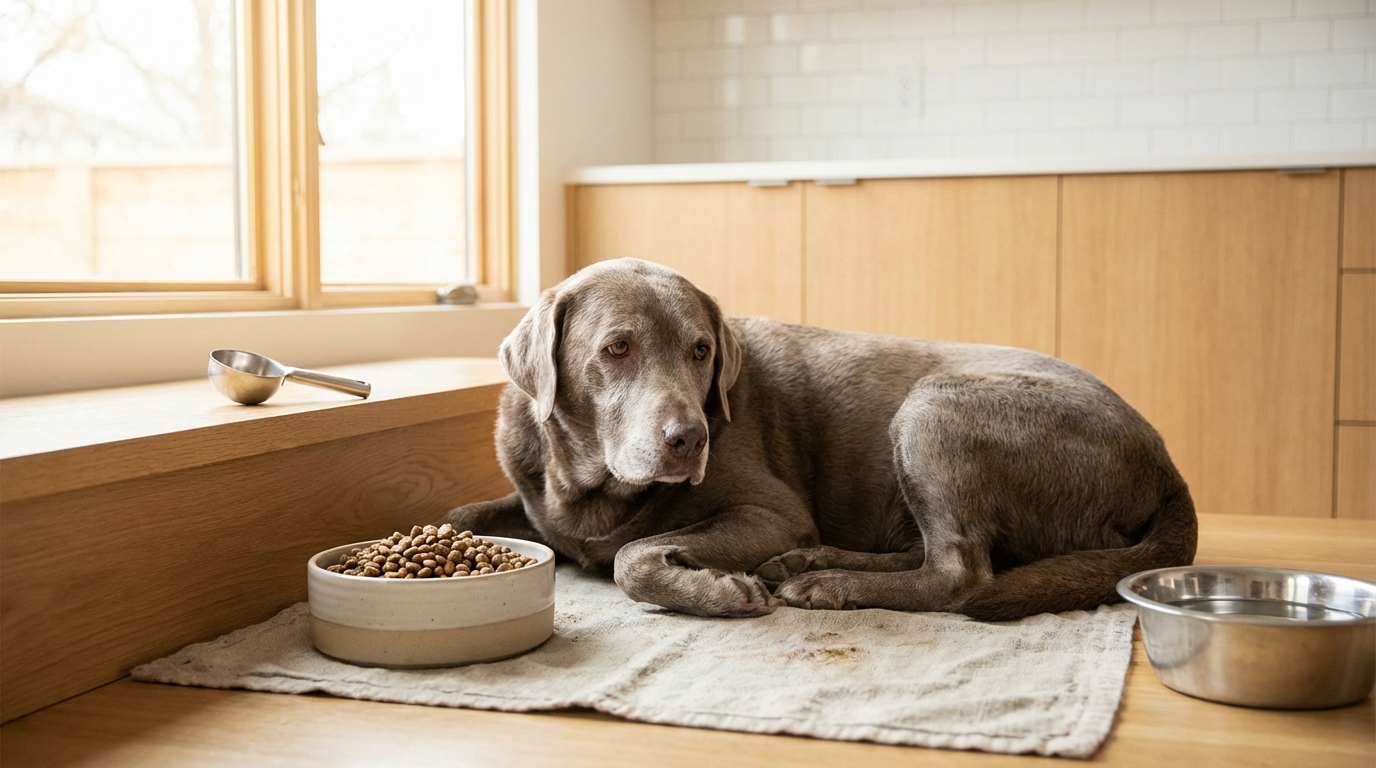
Calories, weight control, and body condition
Many older dogs burn fewer calories because they move less or their metabolism slows, so continuing the same portions can lead to creeping weight gain. Extra weight adds strain to joints and can reduce overall comfort, which then reduces activity further.
A well-designed senior diet often balances moderate calories with satisfying protein and fibre. Rather than focusing on the number on the scales alone, use body condition: you should be able to feel ribs with a light touch and see a waist from above.
- If weight is increasing: reduce daily calories gradually and measure meals with a scoop or scales.
- If weight is dropping: consider a more energy-dense option or smaller, more frequent meals.
- Treats count: keep treats modest and choose lower-fat options where possible.
Quick tip: Take a top-down photo of your dog once a month (same spot, same angle). It’s an easy way to spot subtle body-shape changes that are hard to notice day-to-day.
Protein, muscle maintenance, and mobility support
Ageing dogs can lose lean muscle more easily, especially if activity drops. That’s why many modern approaches prioritise adequate, high-quality protein to help maintain muscle, support immune function, and keep your dog feeling strong.
For some dogs, the best move is not “less protein”, but “better protein” plus the right overall calories. Look for diets that provide clearly identified animal proteins and a complete vitamin and mineral profile, rather than relying heavily on fillers.
Many owners also look for extra nutritional features that suit older pets. Without making medical claims, common options you’ll see in senior formulas include:
- Omega-3 fatty acids (often from fish oil) for skin, coat, and general wellbeing.
- Glucosamine and chondroitin as joint-supporting nutrients commonly included in senior diets.
- Antioxidants (such as vitamin E) to support healthy cells.
- Added fibre and prebiotics to support digestive consistency.
If your dog has kidney or liver concerns, nutritional targets may differ—choose food based on your dog’s specific health needs rather than age alone.
Digestion, fibre, and sensitive stomachs
Digestive tolerance can change with age. Some senior dogs do better with slightly higher fibre to support regular stools, while others need a simpler ingredient list if they’re prone to wind or loose motions.
When evaluating an older dog’s food, check for a clear approach to gut support: consistent ingredients, appropriate fibre sources, and a nutrient profile that’s easy to digest. Sudden diet changes can upset the gut, so transitions should be gradual.
- Constipation: consider diets with moderate fibre and ensure steady water intake.
- Loose stools: a slower food transition and simpler formulas may help.
- Dental changes: if crunching kibble is difficult, soften it with warm water rather than switching everything overnight.
Portioning, feeding routines, and a simple transition checklist
Older dogs often thrive on routine. Splitting daily intake into two to three smaller meals can support steadier energy and may be easier on digestion than one large feed. If your dog tends to gulp meals, slow, calmer feeding can also reduce discomfort.
Wet food can also be useful for some senior dogs—particularly if they’re drinking less, need extra aroma to encourage eating, or have dental discomfort that makes dry biscuits harder to chew. Dry food can still be a good choice for many seniors and is often convenient for measured feeding. Whichever format you choose, make changes gradually and monitor stools and appetite.
Make feeding decisions based on what you can measure and repeat. The most effective plan is consistent: controlled portions, limited extras, and clear monitoring of weight, stools, and appetite.
- Measure meals: use the same scoop/scales every time to avoid portion creep.
- Hydration matters: keep water bowls accessible; consider adding water to meals for dogs that drink less.
- Food enrichment: gentle puzzle feeders or scatter feeding can keep the mind active without over-exercising the body.
- Plan treats: use part of the daily kibble allowance as training rewards.
Mini-checklist: transitioning to a new food (7–10 days)
- Days 1–3: 75% current food + 25% new food.
- Days 4–6: 50% current + 50% new.
- Days 7–10: 25% current + 75% new, then move to 100% new if stools and appetite stay normal.
- Keep it simple: avoid changing treats and extras at the same time, so you can identify what your dog tolerates.
- Track the basics: appetite, stool consistency, scratching/itching, and energy for the first 2–3 weeks.
Mini-checklist: quick body condition check
- Ribs: easy to feel with a light touch, not hidden under a thick layer of fat.
- Waist: visible from above (a gentle “hourglass” shape).
- Tummy tuck: the abdomen should slope up from ribs to hips when viewed side-on.
Feeding frequency guide (general)
- Small dogs: often do well on 2–3 smaller meals.
- Medium to large dogs: typically 2 meals daily, with a third smaller meal if appetite or digestion benefits.
Frequently Asked Questions
Should I switch to a senior formula or just feed less adult food?
For some dogs, simply adjusting portions of a well-balanced adult diet works, especially if they’re maintaining a healthy weight and have no digestion issues. A senior formula can be helpful when you need targeted support for weight management, muscle maintenance, mobility nutrients, or easier digestion.
What’s the best way to tell if my senior dog is underfed or overfed?
Use body condition rather than guesswork: you should be able to feel ribs easily without pressing hard, and your dog should have a visible waist. Ongoing weight gain, heavy panting on light activity, or loss of waistline suggests overfeeding, while prominent ribs and reduced muscle tone may indicate underfeeding.
How quickly should I change my dog’s diet if they’re older?
Most senior dogs do best with a slow transition over at least a week to reduce stomach upset. If your dog has a history of sensitive digestion, extend the transition and change only one variable at a time (food first, then treats, then supplements).
When should I speak to a vet about feeding an older dog?
It’s worth getting advice promptly if you notice rapid weight loss or unexplained weight gain, increased thirst or urination, vomiting or diarrhoea lasting more than 24–48 hours, blood in vomit/stools, reduced appetite for more than a day (especially with lethargy), or signs of marked dental pain. Ongoing stiffness, reluctance to exercise, or repeated digestive upsets are also good reasons to ask for a tailored plan.
Written by: Atlantic Pet Products Team. Reviewed by: A veterinary professional (nutrition and senior pet care).
References: World Small Animal Veterinary Association (WSAVA) guidance on selecting pet foods; AAFCO and FEDIAF nutrient profile frameworks for complete and balanced diets.
Ready to update your dog’s feeding plan? Choose a high-quality option designed for ageing needs, monitor results for a few weeks, and make small adjustments as needed—then chat to your vet if you’re unsure what’s best for your dog’s health history.