

Choosing the right senior dog food can make everyday life easier for ageing dogs — from steadier energy to a healthier weight. As metabolism, digestion, and mobility change, a diet for older dogs often needs different calorie levels, highly digestible ingredients, and targeted nutrients. Here’s how to adjust nutrition for senior dogs without overcomplicating mealtimes.
When is a dog considered senior?
“Senior” isn’t a fixed age — it’s a life stage. Many dogs start showing subtle changes (slower recovery after exercise, weight creep, greying muzzle, stiffness) earlier than expected, especially in larger breeds.
Rather than waiting for a birthday milestone, treat senior feeding as a response to what you’re seeing day-to-day. If your dog’s body condition, appetite, stools, sleep, or activity level has shifted, it’s a good moment to reassess their food and feeding routine.
- Early senior signs: easier weight gain, reduced stamina, pickier appetite.
- Later senior signs: muscle loss, dental changes, sensitive digestion.
It also helps to think about the practical side of ageing. Arthritis may make bending to eat uncomfortable, dental disease can reduce chewing comfort, and some dogs show cognitive changes that affect appetite or routine. The right format (smaller kibble, soaked kibble, wet food, or more frequent small meals) can make feeding easier while you address underlying issues with your vet.
How nutritional needs change with age
A well-chosen senior dog food is usually built around three realities: older dogs burn calories differently, maintain muscle less easily, and may digest certain ingredients less efficiently. The goal is to keep them lean, strong, and comfortable.
Calories often need to come down. Many seniors move less and have a lower metabolic rate. If you keep feeding the same portions as in adulthood, weight gain can happen quickly — and excess weight adds strain to joints and the heart.
Protein still matters (with a clear exception). Some older dogs lose muscle even when they’re gaining fat. In most cases, quality protein helps maintain lean mass, supports immune function, and improves overall condition. However, protein may need to be moderated if your dog has diagnosed kidney disease or another condition where your vet has advised a renal-support diet; in that case, follow veterinary guidance rather than choosing a higher-protein option on your own.
Fibre and digestibility become more important. Ageing guts can be sensitive; you may notice inconsistent stools or gassiness. Foods with appropriate fibre and easily digested ingredients can help keep bowel movements regular.
Hydration support counts. Some seniors drink less or are prone to dehydration. Wet food, added water to kibble, or broth-style toppers (without onion/garlic) can increase fluid intake.
Targeted fats can support comfort. Many senior diets include omega-3 sources to support skin, coat, and mobility. Rather than chasing trendy additions, focus on overall balance and how your dog responds over several weeks.
If you’re searching for the best food for senior dogs with sensitive stomachs, start by prioritising digestibility, a gentle transition, and a formula your dog reliably tolerates — then adjust portions to keep them lean.
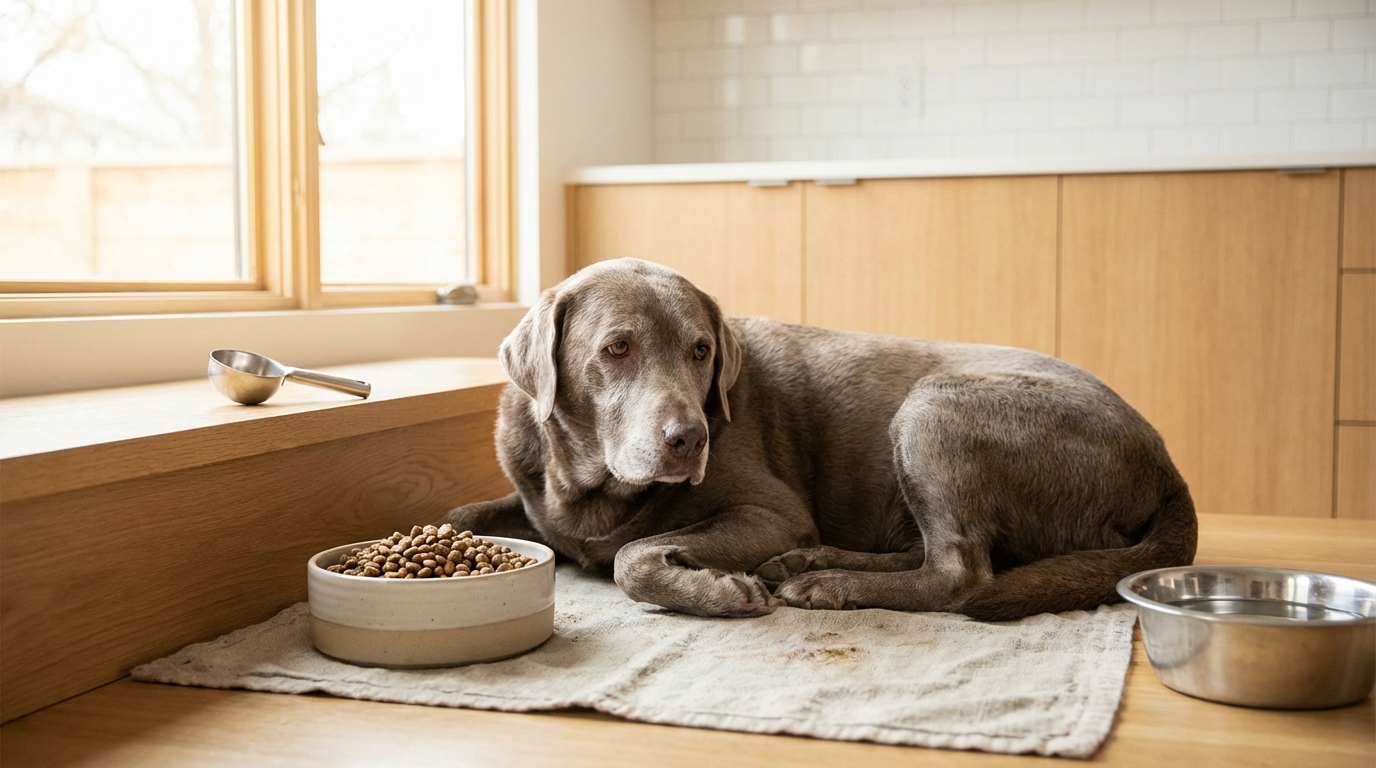
Building a diet for older dogs: what to prioritise
A practical plan for feeding an older dog focuses on body condition first, then comfort and convenience. Use these priorities when comparing formulas and deciding what to feed.
- Lean body condition: choose a food that supports weight management if your dog is gaining easily; measure meals rather than free-pouring.
- Muscle maintenance: look for clearly listed animal proteins and a nutrient profile designed for older dogs.
- Joint and mobility support: many senior diets include joint-supporting nutrients; pair nutrition with appropriate daily movement.
- Skin and coat support: older dogs can get drier skin; balanced fats can help maintain coat quality.
- Dental comfort: if chewing is harder, consider smaller kibble, soaked kibble, or a softer format.
Label checklist for shoppers: Start with foods labelled “complete and balanced” so your dog isn’t missing essential nutrients. If the product is marked for the “senior” life stage, it’s typically formulated with older dogs in mind, but you still need to match it to your dog’s body condition and activity level.
A concrete label-reading example (calories and portions): imagine Food A lists 360 kcal per cup and Food B lists 430 kcal per cup. If your dog currently eats 2 cups of Food A per day (about 720 kcal/day), feeding 2 cups of Food B would raise intake to about 860 kcal/day — often enough to cause gradual weight gain. To keep calories similar, you’d reduce Food B to roughly 1.7 cups/day (because 720 ÷ 430 ≈ 1.7). Use the feeding guide as a starting point, then adjust based on body condition over 10–14 days.
For fats, look for identifiable omega-3 sources (for example, fish oil or algae oil) rather than relying on vague claims. If you’re choosing between similar options, prioritise the one your dog digests well and maintains a healthy weight on.
Whatever you choose, consistency matters. Stick with one complete, balanced base diet for a few weeks before making additional changes, so you can tell what’s actually helping.
Quick tip: Use a 1–9 body condition score at home: you should be able to feel ribs with light pressure and see a defined waist. Adjust portions by small amounts for 10–14 days, then reassess.
How to switch foods and manage common issues
Older dogs can be less tolerant of sudden changes. A gradual transition helps protect digestion and makes it easier to spot whether the new diet suits them.
- Transition slowly: mix the new food into the old over 7–10 days, increasing the new portion every couple of days.
- Watch stools and appetite: mild changes can be normal, but persistent diarrhoea, constipation, or refusal to eat means you should reassess.
- Weigh and measure: use kitchen scales or a measuring cup; “eyeballing” portions commonly leads to overfeeding.
If your dog is gaining weight: reduce daily calories, tighten treat portions, and split meals into two or three smaller feeds. Consider a formula designed for weight control rather than simply feeding less of an energy-dense food.
If your dog is losing weight or muscle: check that they’re actually eating the full ration and that dental comfort isn’t limiting intake. A more calorie-dense option may help, as can smaller, more frequent meals.
If your dog seems hungry all the time: add bulk with vet-approved vegetables or choose a higher-fibre diet to improve satiety without excess calories.
If chewing is difficult: try soaking kibble in warm water to soften it, or choose a softer texture. This can be especially helpful for dogs with dental discomfort, but ongoing bad breath, drooling, or dropping food can signal dental disease that needs veterinary care.
When to involve your vet: get professional advice if you notice unexplained weight loss, increased thirst or urination, persistent vomiting or diarrhoea, changes in appetite that last more than a day or two, or signs of pain. Conditions such as kidney disease, diabetes, and dental disease can affect what “best” looks like — including whether higher or moderated protein is appropriate. Your vet can help you choose a diet that supports your dog’s health status, not just their age.
Treats, toppers, and supplements: what’s worth it?
Extras can be useful, but they can also unbalance nutrition for senior dogs if they creep up. As a rule, treats and toppers should make up a small portion of daily intake, especially for dogs prone to weight gain.
Treats: pick smaller treats, break larger ones into pieces, and “pay” with part of your dog’s daily kibble allowance when training. For older dogs, softer textures can be easier on teeth.
Toppers: a spoonful of wet food, warm water mixed into kibble, or a simple single-protein topper can improve palatability for picky eaters. Avoid rich, fatty additions that can trigger digestive upset.
Supplements: only add one new supplement at a time, and give it a few weeks to assess any change. If your dog already eats a complete senior diet, you may not need many add-ons — the most important “supplement” is often keeping them at a healthy weight.
If you’re deciding what to prioritise, think in “needs” rather than trends: weight control for easy gainers, digestive support for inconsistent stools, and mobility support for stiffness. If you’re unsure what fits your dog’s health history, ask your vet before making major changes.
Frequently Asked Questions
Should I switch to senior dog food straight away when my dog gets older?
Not necessarily on a specific birthday. Switch when your dog’s needs change — for example, reduced activity, weight gain, or sensitive digestion — and choose a formula that matches those needs.
How much to feed a senior dog?
Start with the feeding guide on the pack, then tailor it to your dog’s calorie needs and body condition. Measure meals, track weight every 2–4 weeks, and adjust portions gradually (small changes, then reassess after 10–14 days). If your dog has a health condition affecting appetite or weight, your vet can help you set a safer target.
How many times a day should I feed an older dog?
Most seniors do well on two meals per day, but three smaller meals can help dogs with appetite changes, reflux, or those who struggle to maintain weight. The best schedule is the one your dog digests comfortably and that helps keep their body condition stable.
What are the biggest mistakes in a diet for older dogs?
The most common issues are overfeeding (including too many treats), frequent food swapping, and ignoring gradual weight or muscle changes. Measuring portions, tracking weight, and making small adjustments are usually more effective than big overhauls.
Need a simpler routine? Choose a complete, balanced formula that suits your dog’s needs, measure every meal, and adjust based on body condition over time. If you’re unsure what’s best for your dog’s health history, chat to your vet.
Next steps: If your dog needs help with weight control, digestion, or mobility support, choose options designed for that goal and introduce changes gradually. Keep it practical, keep it consistent, and involve your vet when health conditions are in the mix.